
Toshiba VF-S15 inverters
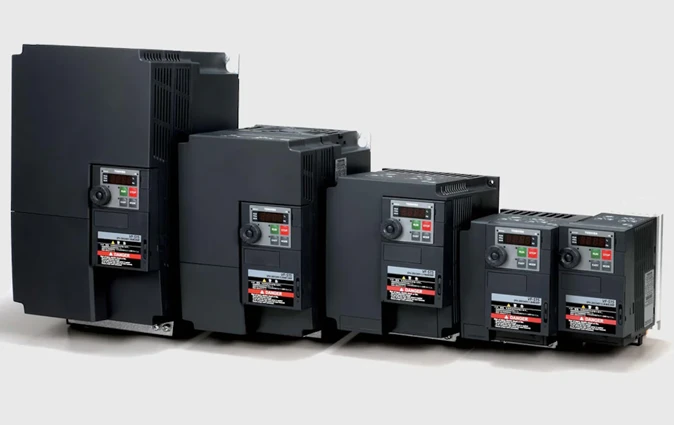
Inverters are the "beating heart" of modern automation. Their primary function is to convert the fixed electrical power from the grid into variable power, allowing precise control of electric motor speed and torque. In extraction systems, the inverter is not simply an electrical component, but the true "driver" of energy savings and mechanical protection.
In an extraction system, the workload is not always constant. Using a Toshiba VF-S15 or VF-AS3 inverter allows the system to move from an "always running at maximum capacity" approach to an intelligent and adjustable solution.
In an extraction system, the workload is not always constant. Using a Toshiba VF-S15 or VF-AS3 inverter allows the system to move from an "always running at maximum capacity" approach to an intelligent and adjustable solution.
The VF-S15 inverter is the ideal solution when the perfect balance between compact size and high performance is required. It is an extremely versatile inverter designed for a wide range of industrial applications.
- Airflow regulation: allows extraction power to be adjusted according to the machines actually in operation, avoiding unnecessary energy waste when the system does not need to operate at full capacity.
- Noise reduction: by lowering motor speed when maximum power is not required, noise pollution in the workshop is significantly reduced.
- Soft starts: eliminates mechanical stress on fan belts and bearings during start-up, extending the service life of the entire extraction unit.
- Energy savings: thanks to advanced algorithms, it optimizes motor consumption according to the actual load, significantly reducing electricity costs.
- Ease of use: equipped with a front control knob ("Easy Key") that allows quick configuration even for users without advanced programming skills.
- Long service life: designed for reliable operation over time (with capacitor life expectancy up to 10 years) even in demanding industrial environments.
- Integrated safety: features the Safe Torque Off (STO) safety function, ensuring immediate motor shutdown in emergency situations.
Installing Toshiba inverters in electrical control panels means guaranteeing the end customer:
- Reliability: reduced risk of unexpected machine downtime.
- Efficiency: reduced mechanical wear thanks to smooth motor starts and stops.
- Long-term value: use of globally recognized Japanese components known for their strength and durability.
- Energy savings: significantly reduced electricity consumption compared to a motor connected directly to the power supply (direct-on-line starting).
- Reduced maintenance: fewer vibrations and belt shock loads mean fewer repair interventions.
- Compliance: systems ready to meet energy efficiency regulations and Industry 4.0 requirements.
La Coro Impianti Srl is a certified company:

Are you interested in these products?
Are you interested in these products?
La Coro Impianti Srl
Via S. Pio da Pietrelcina, 40 - 25035 Ospitaletto (BS) - Italy - Tel: +39.030.6848036 - Email: lacoro@lacoro.it
P.I. 03150940173 - Cap. Soc. 1.000.000,00 € i.v. - REA BS 333813
Via S. Pio da Pietrelcina, 40 - 25035 Ospitaletto (BS) - Italy - Tel: +39.030.6848036 - Email: lacoro@lacoro.it
P.I. 03150940173 - Cap. Soc. 1.000.000,00 € i.v. - REA BS 333813
La Coro Impianti Srl
Via S. Pio da Pietrelcina, 40
25035 Ospitaletto (BS) - Italy
Tel: +39.030.6848036
Email: lacoro@lacoro.it
P.I. 03150940173 - REA BS 333813
Cap. Soc. 1.000.000,00 € i.v.
Via S. Pio da Pietrelcina, 40
25035 Ospitaletto (BS) - Italy
Tel: +39.030.6848036
Email: lacoro@lacoro.it
P.I. 03150940173 - REA BS 333813
Cap. Soc. 1.000.000,00 € i.v.