
 ACTIVATED
CARBON
Industrial activated carbon filters
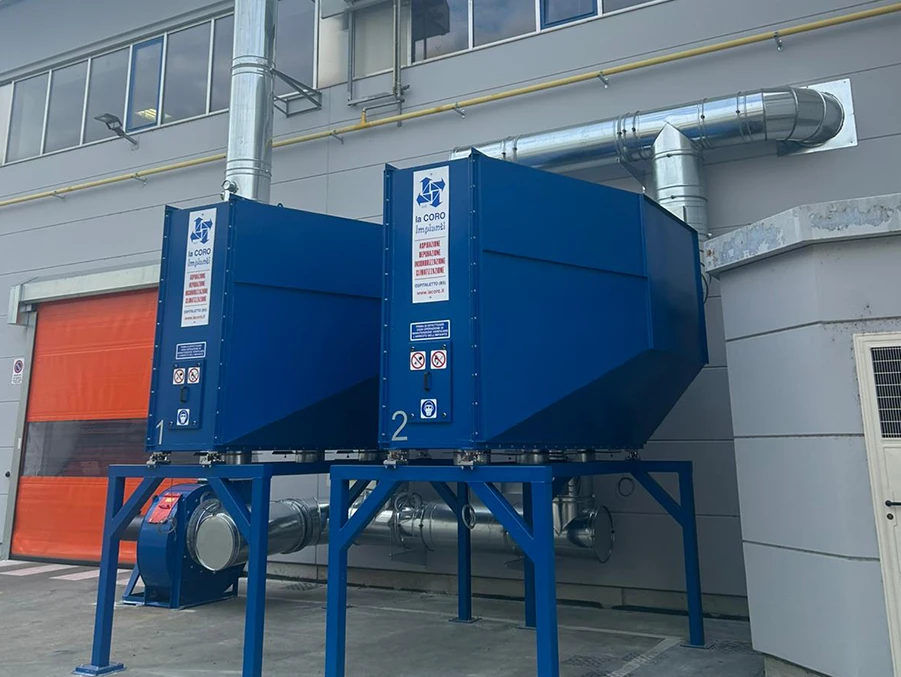
Solutions for the treatment of odors, vapors, and volatile organic compounds
Activated carbon filters are air treatment systems used in industrial processes where it is necessary to reduce the presence of odors, vapors, solvents, volatile organic compounds (VOCs), and other airborne substances contained in extracted air streams. La Coro Impianti designs and manufactures industrial activated carbon filters sized according to airflow rate, contaminant type, pollutant concentration, required contact time, and the operating conditions of the system. This technology is particularly suitable when the challenge is not only the capture of contaminants at the source, but also their treatment before air is discharged into the atmosphere or before completing the overall purification process.
How activated carbon works
Activated carbon is a porous material characterized by a very high specific surface area. Thanks to this structure, it can retain many substances in the gas phase through adsorption, helping reduce odors and airborne pollutants. To ensure effective performance, the filter must be correctly sized. Key factors include the quantity and type of activated carbon used, air velocity through the filter bed, contact time, pollutant concentration, and the possible presence of dust, moisture, or substances that may reduce the effectiveness of the adsorbent material. For this reason, when the extracted air stream also contains particulate matter, it is recommended to install upstream pre-filtration systems to protect the activated carbon and maintain its efficiency for a longer period.
Applications
- Painting and surface treatment processes;
- Chemical and pharmaceutical industries;
- Processes involving solvents, adhesives, resins, and organic substances;
- Cosmetic industry;
- Rubber and plastics industry;
- Waste treatment facilities;
- Air purification systems for odor removal;
- Systems with VOC or organic vapor emissions.
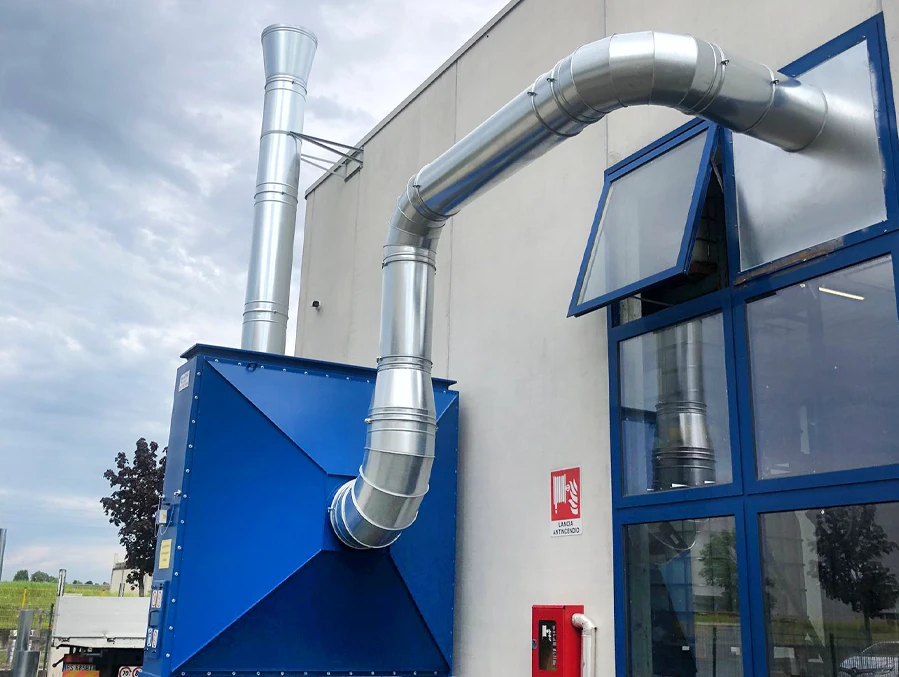
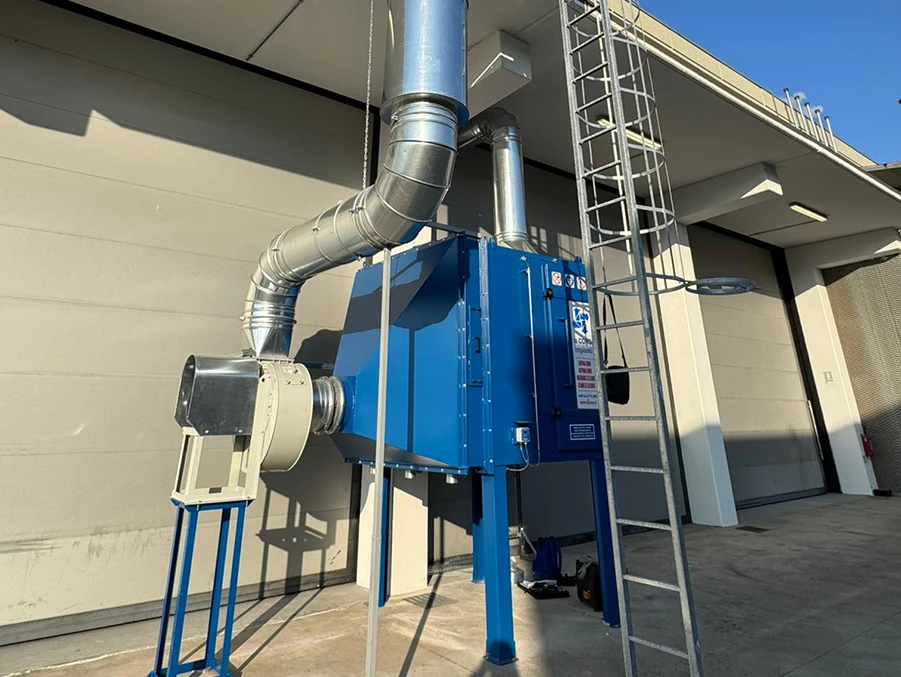
Design, maintenance, and performance monitoring
An activated carbon filter should not be considered simply as a container filled with filtering material. Its effectiveness depends on the correct system design and on proper long-term maintenance. La Coro supports customers in selecting the most suitable configuration, defining the appropriate source capture and pre-filtration systems, manufacturing the filtration unit, and managing inspection, replacement, or carbon regeneration activities when applicable. Proper filter management helps maintain more consistent performance, reduce the risk of uncontrolled emissions, and create useful documentation for HSE, environmental, and ESG compliance requirements.
Main features
- Metal framework construction;
- Custom configuration based on airflow rate and the pollutants to be treated;
- Activated carbon filter bed selected according to the specific application;
- Access doors for inspection, carbon loading, and carbon discharge;
- Flanged connections for integration with extraction duct systems;
- Possibility of integration with pre-filtration systems;
- Sizing based on airflow rate, pollutant concentration, and contact time;
- Scheduled carbon replacement or regeneration management, where applicable.
La Coro Impianti Srl is a certified company:

Are you interested in this product?
Are you interested in this product?
La Coro Impianti Srl
Via S. Pio da Pietrelcina, 40 - 25035 Ospitaletto (BS) - Italy - Tel: +39.030.6848036 - Email: lacoro@lacoro.it
P.I. 03150940173 - Cap. Soc. 1.000.000,00 € i.v. - REA BS 333813
Via S. Pio da Pietrelcina, 40 - 25035 Ospitaletto (BS) - Italy - Tel: +39.030.6848036 - Email: lacoro@lacoro.it
P.I. 03150940173 - Cap. Soc. 1.000.000,00 € i.v. - REA BS 333813
La Coro Impianti Srl
Via S. Pio da Pietrelcina, 40
25035 Ospitaletto (BS) - Italy
Tel: +39.030.6848036
Email: lacoro@lacoro.it
P.I. 03150940173 - REA BS 333813
Cap. Soc. 1.000.000,00 € i.v.
Via S. Pio da Pietrelcina, 40
25035 Ospitaletto (BS) - Italy
Tel: +39.030.6848036
Email: lacoro@lacoro.it
P.I. 03150940173 - REA BS 333813
Cap. Soc. 1.000.000,00 € i.v.